Your pet is slowing down. They hesitate at the stairs, wince when they rise from sleep, or stop mid-walk without a clear reason. Pain is hard to miss once you know what to look for. But many pet owners are surprised to learn that managing that pain does not always require a lifetime of medication. Laser therapy for pets is a proven, drug-free treatment that reduces pain and promotes healing using focused light energy. It is safe, non-invasive, and effective across a wide range of conditions, from post-surgical recovery to chronic joint disease. This guide explains how it works, what conditions it treats, what your pet can expect during a session, and how to decide if it is the right choice for your animal.
What Is Laser Therapy for Pets, and How Does It Work?
Laser therapy, also called photobiomodulation, uses specific wavelengths of light to penetrate deep into tissue. The light energy stimulates cells to produce more energy, reduce inflammation, and repair damage faster than they would on their own.
The process is painless. Most pets relax during treatment. Sessions typically last between five and twenty minutes depending on the area being treated and the severity of the condition.
Studies estimate that up to 90% of patients treated with therapeutic laser show measurable improvement in comfort and mobility. That figure holds across species, including dogs, cats, and exotic animals.
The therapy does not damage tissue. There are no incisions, no needles, and no sedation required. The device is simply moved slowly over the treatment area while the light does its work beneath the skin.
Signs Your Pet May Benefit From This Treatment
Pets cannot tell you they are hurting. They compensate, slow down, and hide discomfort until it becomes undeniable. These signs are worth discussing with your veterinarian:
- Stiffness after resting: Your pet struggles to rise from sleep or moves slowly for the first few minutes after waking. This is a hallmark sign of joint inflammation.
- Reluctance to jump or climb: A dog that refuses to get into the car, or a cat that stops leaping to its favorite perch, may be managing pain.
- Licking or chewing a specific area: Localized pain often causes pets to focus attention on the affected site, even when no wound is visible.
- Reduced activity or play: Pets in pain conserve energy. A once-active animal that now prefers to stay still is signaling something is wrong.
- Muscle loss around a joint: Chronic pain causes a pet to avoid using a limb, which leads to visible muscle wasting over time.
In our experience, pet owners often mistake these signs for normal aging. Pain is not a natural part of getting older, and many animals can recover significant quality of life with the right treatment plan.
Conditions Commonly Treated With Therapeutic Laser
Laser therapy is versatile. It is used for both acute injuries and long-term chronic conditions. Here are the most common applications:
Arthritis and joint pain: Laser therapy for arthritis pets is one of the most frequent uses. The anti-inflammatory effect of photobiomodulation directly targets the swelling and cellular breakdown inside arthritic joints, providing relief that is often noticeable after just a few sessions.
Post-surgical recovery: The therapy accelerates tissue repair at incision sites and reduces swelling after procedures. Many clinics now include it as a standard part of surgical aftercare.
Soft tissue injuries: Sprains, strains, and muscle tears respond well. The increased cellular energy production speeds the natural repair process.
Skin conditions and wound healing: Chronic wounds, hot spots, and areas of skin inflammation heal more quickly when treated with therapeutic light.
Nerve damage and disc disease: In cases of spinal injury or intervertebral disc disease, laser therapy can reduce nerve inflammation and support recovery of function alongside other treatments.
Many pets with multiple conditions benefit from laser therapy as a bridge treatment, reducing their need for anti-inflammatory medications while other therapies take effect.
A Closer Look From Dr. Kamryn Kurtz
Dr. Kamryn Kurtz, associate veterinarian and certified acupuncturist at Animal Medical Clinic of Gulf Gate, has a particular interest in integrative medicine. She approaches pain management as a whole-body challenge, not just a prescription. “One of the things I appreciate most about laser therapy is how well it complements other modalities,” she notes. “For a patient already receiving acupuncture, or one whose owner prefers to minimize long-term drug use, laser therapy fills a real gap. I see pets come in stiff and leave looser after just a handful of sessions. That kind of visible response is meaningful to both the animal and the family caring for them.” Her background in integrative and botanical veterinary medicine shapes how she thinks about pet pain relief without drugs: the goal is always to support the body’s own healing capacity first.
What to Expect During a Laser Therapy Session
If you are considering this treatment, knowing what happens during a visit helps reduce anxiety for both you and your pet.
- Intake assessment: Your veterinarian reviews your pet’s condition, confirms the treatment area, and determines the appropriate settings based on your pet’s size, coat thickness, and the depth of the tissue being targeted.
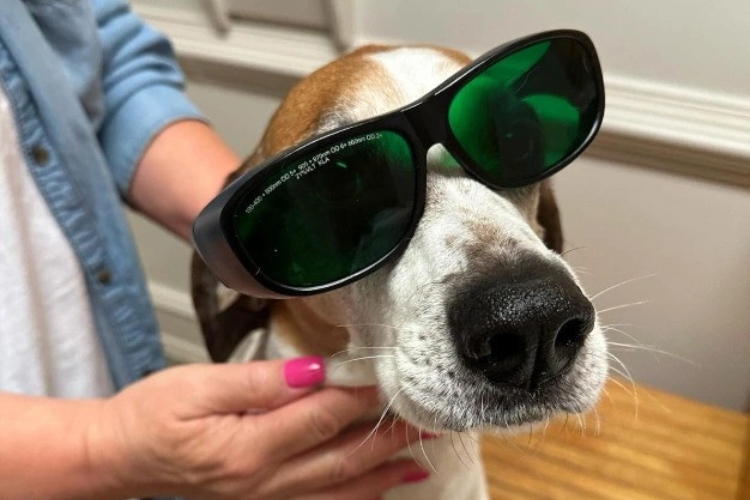
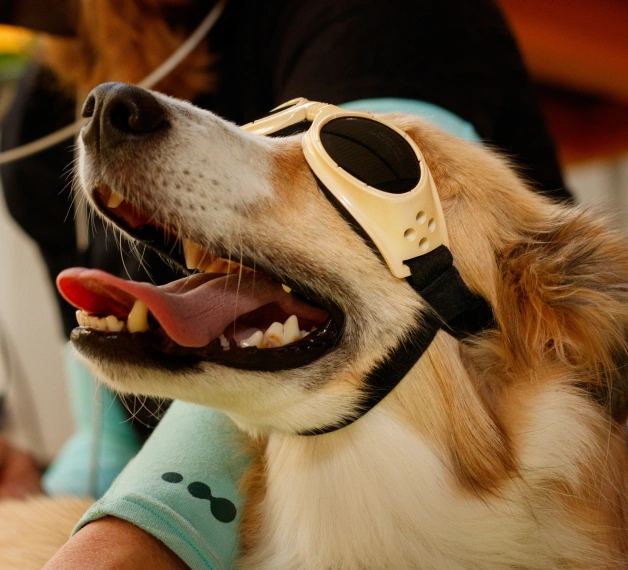
- Protective eyewear: Both the pet and everyone in the room wear protective goggles. The laser light is safe when used correctly, but direct exposure to the eyes must always be avoided.
- Treatment application: The handheld device is moved slowly over the target area. Your pet may feel mild warmth. Many pets become noticeably relaxed during this phase.
- Session length: Most treatments last five to twenty minutes. Acute injuries often respond to fewer sessions. Chronic conditions like arthritis typically benefit from a series of treatments followed by scheduled maintenance visits.
- Post-session observation: No recovery time is needed. Your pet can go home immediately. Some animals show improvement the same day. Others improve gradually over the course of several sessions.
Pet owners often tell us they are surprised by how calm their pets are during treatment. Many dogs and cats fall asleep on the table.
In Florida, where heat and humidity place additional physical stress on older joints and arthritic tissue, we see a particularly strong response to laser therapy in senior pets. The warm climate accelerates inflammation in already-compromised joints, and therapeutic laser helps counteract that process without added pharmaceutical burden.
Pet Pain Relief Without Drugs
Is laser therapy a replacement for all medications? No. Laser therapy is a powerful complement to veterinary care, not a complete replacement for every medication. For some patients, it reduces or eliminates the need for pain medications. For others, it works alongside existing prescriptions to improve outcomes. Your veterinarian will help you understand what combination is right for your pet.
Many pet owners assume that if their pet is not crying or yelping, they are not in pain. That assumption leads to undertreatment. Pets are instinctively wired to hide discomfort, which means by the time behavior changes are obvious, pain has often been present for some time.
Pet pain relief without drugs is not about avoiding medicine entirely. It is about choosing targeted, evidence-based therapies that address the root cause of discomfort. Laser therapy does exactly that, reducing inflammation, supporting tissue repair, and improving quality of life in a way that medications alone often cannot.
We frequently remind our clients that starting laser therapy early, rather than waiting for severe deterioration, produces the best long-term outcomes. Proactive integrative care gives pets more good years.
How to Decide If Laser Therapy Is Right for Your Pet
The best starting point is a thorough veterinary examination. Your vet will evaluate the specific source of pain, rule out conditions that require different treatment first, and determine whether laser therapy is appropriate for your pet’s age, breed, and health status.
Vet laser therapy benefits are best realized when the treatment is part of a broader care plan. A clinic that offers multiple modalities, including acupuncture, nutrition counseling, and integrative medicine alongside conventional care, is better positioned to create a plan that treats the whole animal rather than a single symptom.
Ask your veterinarian how many sessions are typically recommended for your pet’s condition, how response is monitored, and whether maintenance sessions are part of the long-term plan. A good integrative practice will give you clear answers and realistic expectations. Animal Medical Clinic of Gulf Gate offers laser therapy as part of a comprehensive approach to pain management and recovery.
Conclusion
Laser therapy for pets gives pet owners a meaningful option when pain management, faster healing, or reduced medication use are priorities. It is safe, well-tolerated, and effective across a wide range of conditions, from arthritis to surgical recovery to soft tissue injuries. Cold laser treatment dogs and cats receive in a clinical setting is supported by decades of research and growing adoption across veterinary practices. If your pet is slowing down, stiff after rest, or recovering from a procedure, a conversation with your veterinarian about photobiomodulation could be one of the most valuable steps you take. Animal Medical Clinic of Gulf Gate is here to help you explore every option for your pet’s comfort and long-term health. Book an appointment today.
Frequently Asked Questions
Q: How many laser therapy sessions does a pet need to see results?
Ans: It depends on the condition being treated. Pets with acute injuries often respond within two to four sessions. Those with chronic conditions like arthritis typically begin a series of six to eight initial sessions, followed by scheduled maintenance visits to sustain improvement.
Q: Is laser therapy safe for cats?
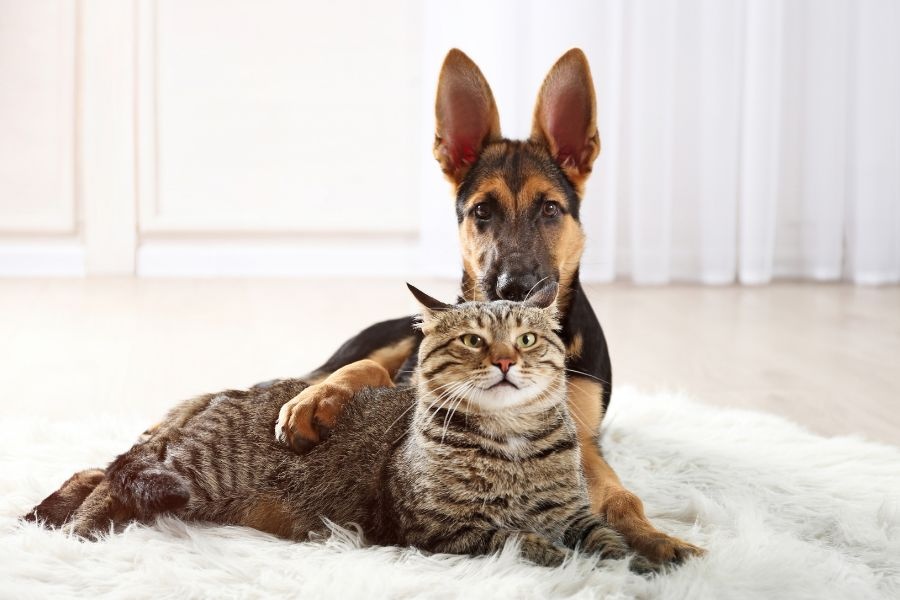
Ans: Yes. Laser therapy is safe for cats when performed by a trained veterinarian using appropriate settings. Protective eyewear is worn throughout the session, and treatment parameters are adjusted for your cat’s specific size and condition.
Q: Can laser therapy be used alongside other treatments?
Ans: It can. Laser therapy is commonly combined with acupuncture, physical rehabilitation, nutrition support, and conventional medications. Many veterinarians use it as part of a multi-modal pain management plan to improve overall outcomes.
Q: How do I know if my pet is in enough pain to need laser therapy?
Ans: Subtle signs matter. Reluctance to climb stairs, stiffness after resting, reduced activity, or changes in posture all suggest a pet may be managing discomfort. A veterinary exam is the most reliable way to assess pain levels and determine appropriate treatment.
Q: Does laser therapy hurt pets during the session?
Ans: No. Most pets experience a gentle warming sensation and remain relaxed throughout. Many animals become calm or even fall asleep on the table during treatment. No sedation is needed.