Your pet’s mouth is telling you something. Most pet owners assume bad breath is just a normal part of having a dog or cat. In reality, it is often one of the earliest signs that something is seriously wrong. Dental disease is one of the most common health problems we diagnose in pets, affecting an estimated 80% of dogs and 70% of cats by age three. The trouble is, most of those pets show warning signs well before owners recognize them.
Pets rarely cry out in pain when their teeth hurt. They quietly adjust their behavior and keep eating. That silence makes early signs easy to miss. This article walks you through the five warning signs of early dental disease so you can act before the problem becomes painful, expensive, and harder to treat.
What Is Dental Disease in Pets and Why Does It Develop
Dental disease in dogs and cats starts with plaque. Plaque is a sticky film of bacteria that coats the teeth after every meal. When plaque is not removed, it hardens into tartar within days. Tartar builds up along the gumline and below it, triggering inflammation, infection, and eventually tooth loss.
The process happens faster than most owners expect. Pets do not brush their own teeth, and many owners are not aware that home dental care is even necessary. By the time a tooth looks visibly brown or damaged, the disease has usually been developing for months or even years.
Pet owners in Sarasota often tell us they assumed their pet’s teeth were fine because the animal was still eating normally. Unfortunately, pets are wired to keep eating through pain. That instinct masks the problem until it becomes severe.
How Do I Know If My Pet Has Dental Disease?
The earliest signs of dental disease in pets are subtle. They show up in daily behavior, not in dramatic symptoms. Here are the five signs most owners miss:
1. Persistent bad breath. Some odor after eating is normal. Breath that smells rotten, fishy, or sour at any time of day is not. Cat bad breath causes are almost always bacterial buildup from plaque and tartar. If your cat’s breath makes you pull back, do not ignore it.
2. Changes in chewing behavior. A pet that suddenly chews only on one side, drops food while eating, or shows less interest in hard chew toys may be experiencing tooth pain. Many owners mistake this for pickiness.
3. Pawing at the mouth or face. When a dog or cat paws repeatedly at the side of their face or rubs it along the floor, that is often a sign of oral discomfort. It does not happen every time, but when it does, a dental exam is warranted.
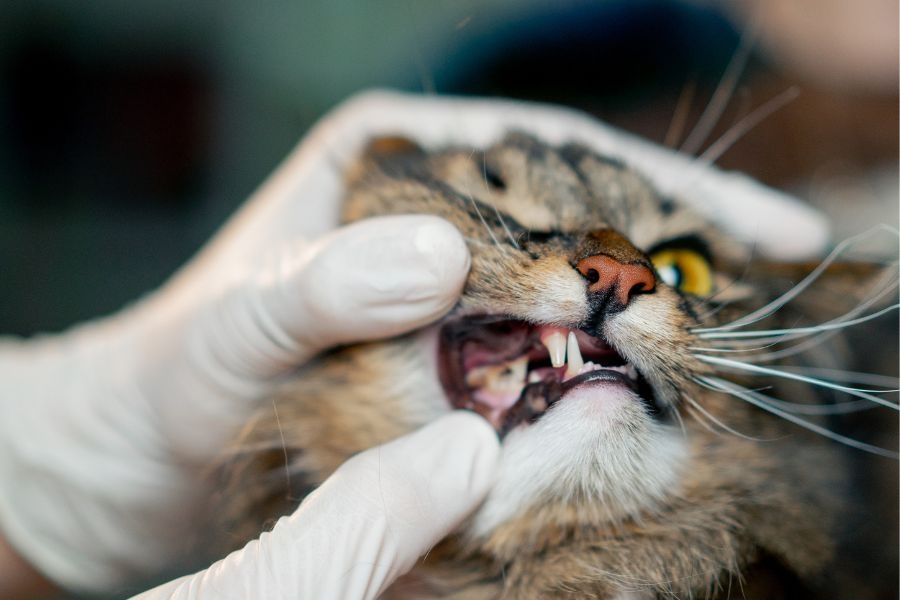
4. Visible tartar or discoloration. Healthy teeth are white or slightly off-white. Yellow or brown buildup near the gumline is tartar and a clear indicator of advancing disease. Dog tooth decay signs often first appear as brown staining on the back molars.
5. Red, swollen, or bleeding gums. Healthy gums are pale pink and firm. Gums that look red along the edge, appear puffy, or bleed when your pet chews are showing signs of gingivitis, the earliest stage of gum disease.
If you notice any of these signs, contact your veterinarian promptly. Catching dental disease early means simpler treatment, lower cost, and less pain for your pet.
Causes and Risk Factors Behind Pet Dental Disease
Some pets are simply more prone to dental problems than others. Small and toy breeds, including Chihuahuas, Shih Tzus, and Dachshunds, develop tartar faster because their teeth are crowded into a smaller jaw. Cats of any breed are at risk, especially those fed primarily soft food.
Age is another major risk factor. Dental disease accumulates over time. Pets that have never had a dental cleaning are far more likely to show severe disease by middle age. Pet gum disease symptoms become increasingly common in pets over five years old.
Diet plays a role too. Dry kibble provides some mild mechanical scrubbing. Soft food leaves more residue on tooth surfaces. Neither replaces professional dental cleanings, but diet can influence how fast plaque builds up.
In Florida’s warm, humid climate, we see a high number of pets with advanced dental disease. The heat does not cause dental problems directly, but it does encourage pets to pant and breathe through their mouths, which can dry out the gum tissue and make the oral environment more hospitable to bacteria. Cat bad breath causes and gum inflammation are among the most frequent complaints we hear from pet owners across Sarasota each year.
How Dental Disease Is Diagnosed and Treated
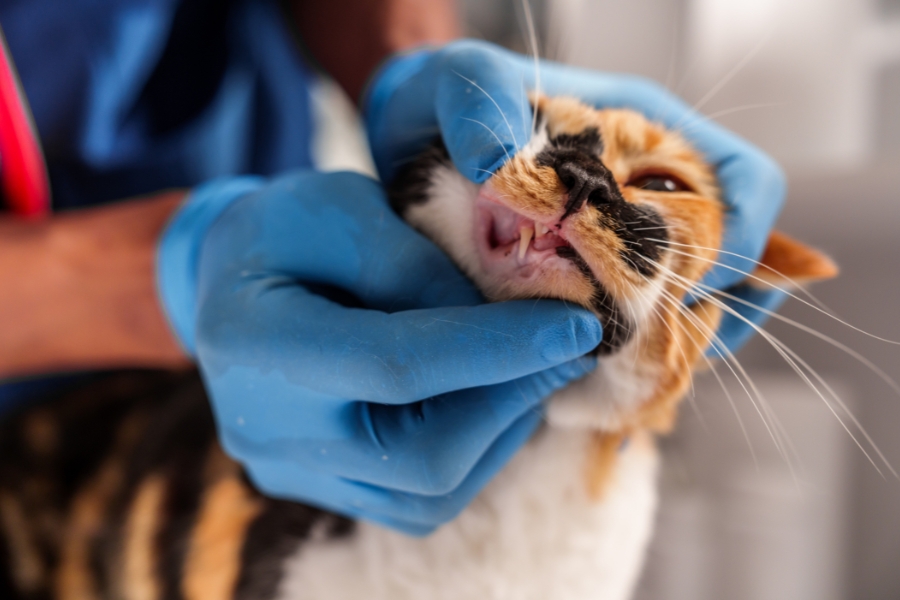
A veterinarian diagnoses dental disease through an oral exam, and in many cases, full dental X-rays are taken under anesthesia. X-rays reveal disease below the gumline that is completely invisible during a visual exam. In our experience, many teeth that look acceptable on the surface are deeply diseased at the root.
Treatment depends on the stage of the disease. The general process follows these steps:
- Pre-anesthetic bloodwork to confirm the pet is healthy enough for sedation.
- Full anesthesia for a safe, thorough, pain-free cleaning.
- Scaling to remove tartar above and below the gumline.
- Dental X-rays to evaluate root and bone health.
- Polishing to smooth the enamel surface and slow future plaque buildup.
- Extraction of any teeth that are too damaged to save.
- Pain management and antibiotics when needed, based on the individual pet.
The American Veterinary Medical Association (AVMA) recommends annual dental exams for all pets, with cleanings as advised by your veterinarian.
Pet gum disease symptoms caught in the early gingivitis stage can often be fully reversed with a professional cleaning and a consistent home care routine. Advanced periodontal disease, however, is irreversible and leads to tooth loss and systemic infection.
Prevention and Home Care Tips for Pet Dental Health
The best dental care starts at home between professional visits. Here are four habits that make a real difference:
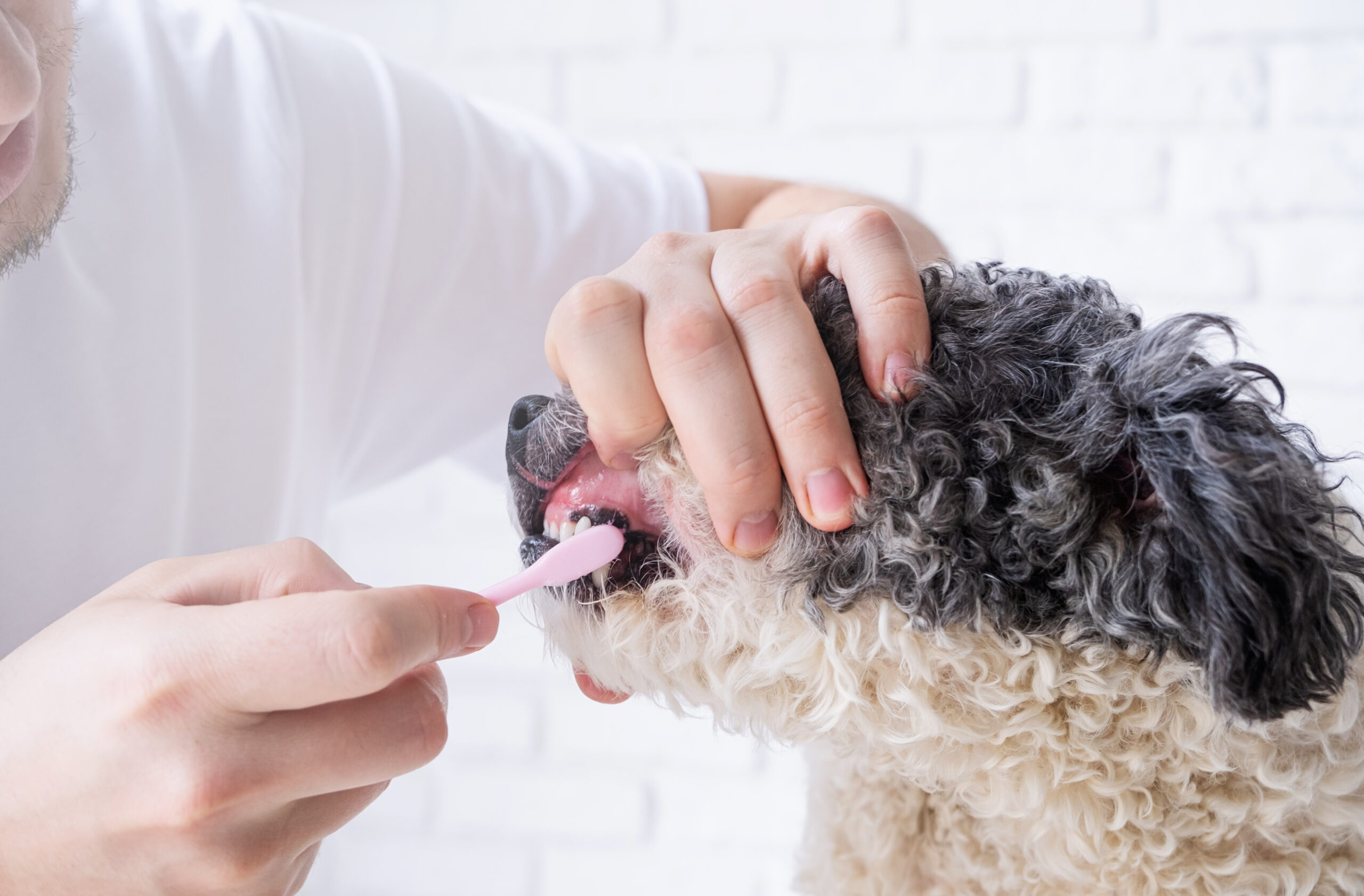
Brush your pet’s teeth. Daily brushing with a pet-safe toothpaste is the single most effective thing you can do. Start slowly with a finger brush and give lots of praise. Most dogs tolerate it within a few weeks. Cats can take longer, but many do adapt.
Use dental chews and toys wisely. Products with the Veterinary Oral Health Council (VOHC) seal have been tested and shown to reduce plaque or tartar. Choose appropriate sizes to avoid choking or tooth fractures.
Add a water additive. Veterinary-approved dental water additives help reduce oral bacteria with minimal effort. They are a helpful supplement, but not a substitute for brushing or professional cleanings.
Schedule annual dental exams. Many owners assume their pet’s teeth are fine as long as they are eating. That is one of the most common misconceptions we see. A pet in pain will still eat, and dental disease will still progress without visible signs at home. Pet dental health tips are only effective when paired with professional monitoring.
At Animal Medical Clinic of Gulf Gate, we make dental wellness a core part of every wellness visit. We will check your pet’s mouth, explain what we find, and guide you on the right cleaning schedule.
Conclusion
Dental disease is almost always preventable when it is caught early. The early signs of dental disease in cats and dogs are subtle, but they are there if you know what to look for. Bad breath, changes in chewing, pawing at the face, visible tartar, and red gums are all signals your pet needs professional attention now.
Do not wait until your pet is in obvious pain. By then, the disease has progressed beyond what simple cleaning can fix. Routine exams, consistent home care, and annual professional cleanings are what keep your pet’s mouth healthy for life. Book an appointment today.
Frequently Asked Questions
How can I tell if my cat has dental disease at home?
Ans: Look for persistent bad breath, drooling, difficulty chewing, or red gums. Cats are good at hiding pain, so even subtle changes in eating habits or behavior warrant a veterinary dental exam.
Is a dog’s bad breath always a sign of dental disease?
Ans: Not always, but it is the most common cause. Persistent foul-smelling breath in dogs, especially breath that smells rotten or sour, is almost always linked to bacterial buildup from plaque and tartar and should be evaluated by a vet.
At what age should I start getting my pet’s teeth professionally cleaned?
Ans: Most veterinarians recommend starting dental exams during your pet’s first year of life. Professional cleanings are often first needed between the ages of one and three, depending on the breed and the rate of tartar buildup.
Can dental disease affect my pet’s overall health?
Ans: Yes. Bacteria from the mouth can enter the bloodstream and affect the heart, kidneys, and liver over time. Treating dental disease is not just about the teeth. It is an important part of protecting your pet’s overall health.
Do pets need anesthesia for a dental cleaning?
Ans: Yes. Anesthesia-free dental cleanings only remove visible surface tartar and leave subgingival disease untreated. Safe, professional cleanings under anesthesia allow for X-rays, thorough scaling below the gumline, and a pain-free experience for your pet.